





























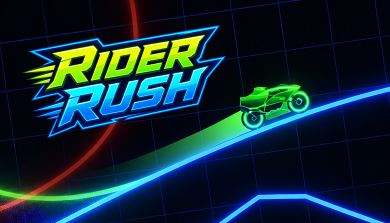
Rider Rush
Speed is not enough to survive in Rider Rush, a fast-paced motorcycle game. Players must navigate changing roads, dodge obstacles, and manage the bike as they go through difficult routes.
What Awaits on the Road
Open Stretches
Clear sections give riders space to accelerate and build momentum. These moments can be used to prepare for upcoming turns, barriers, and tighter parts of the course.
Dangerous Obstacles
Barriers and unexpected hazards can appear with little room for reaction. Watching the road ahead helps players choose a safer line instead of making sudden movements at the last moment.
Tight Corners
Narrow sections demand better positioning. Entering a corner with too much speed can make the motorcycle harder to control, while a measured approach leaves more room for correction.
Speed Has a Cost
Know When to Slow Down
Maximum speed is not always the best choice. Reducing the pace before a difficult section can provide extra reaction time and make precise movements easier.
Protect Your Balance
Small adjustments are often more effective than aggressive steering. Keeping the motorcycle stable becomes especially important when the road becomes unpredictable.
Choose Your Line
The safest route may not always be the shortest one. Players can look for open spaces and plan their movement around obstacles to maintain a steady ride.
Controls
Keyboard Controls
- W / Up Arrow – Accelerate
- S / Down Arrow – Brake / Reverse if supported
- A / Left Arrow – Move / Lean Left
- D / Right Arrow – Move / Lean Right
- Spacebar – Jump / Action if enabled
- Esc – Pause Game
Turn Mistakes Into Better Rides
Understand the Crash
A failed run can reveal whether speed, positioning, or timing caused the problem. Identifying the mistake makes it easier to adjust the next attempt.
Practice Difficult Sections
Returning to troublesome parts of the route helps players become familiar with their timing. Repetition can turn unpredictable obstacles into situations that are easier to handle.
Push Beyond Your Record
Once control improves, players can focus on traveling farther and reducing unnecessary crashes. Better decisions gradually lead to longer and smoother rides.
Stay on the Throttle
Rider Rush combines motorcycle speed with precision and quick decision-making. The road constantly asks players to balance acceleration with control, making each ride an opportunity to improve, survive farther, and set a better personal record.